PPC Agency in India | Best PPC Services & Google Ads Management
Choosing a PPC agency in India is no longer just about finding someone who can run Google Ads. In 2026, effective PPC management combines campaign strategy, conversion tracking, search-intent targeting, AI-assisted bidding, landing-page optimisation, creative testing and commercial measurement. This guide explains what businesses should expect from professional PPC services and how to evaluate an agency before committing budget.

- Reviewed by
- RAASIS Team
- Last reviewed
- Target market
- India
- Editorial disclosure
- This briefing provides general digital growth information and does not guarantee rankings or commercial outcomes.
Answer summary
The short answer.
Choosing a PPC agency in India is no longer just about finding someone who can run Google Ads. In 2026, effective PPC management combines campaign strategy, conversion tracking, search-intent targeting, AI-assisted bidding, landing-page optimisation, creative testing and commercial measurement. This guide explains…
A PPC agency in India plans, launches, tracks and optimises paid advertising campaigns to generate measurable leads, sales or revenue. The best PPC services go beyond clicks and impressions: they connect Google Ads and other paid channels with accurate conversion tracking, relevant landing pages, search-term analysis, bidding strategy and business-level metrics such as cost per qualified lead, customer acquisition cost and return on ad spend. Key Takeaways A PPC agency should optimise for business outcomes, not simply traffic, impressions or cheaper clicks. Accurate conversion measurement should be established before aggressive automated bidding or campaign scaling. Google Ads performance depends on bids, relevance, landing-page quality, auction context and other Ad Rank factors—not budget alone. Search-term analysis, negative keywords and landing-page alignment remain essential even as Google Ads becomes increasingly AI-driven. The best PPC agency for your business is the one that understands your economics, sales process and target customer. Google Ads account ownership, transparent reporting and clearly separated management fees and media spend should be established before engagement.
What Does a PPC Agency in India Actually Do in 2026? A PPC agency manages paid digital advertising with the objective of turning advertising investment into measurable business results. That sounds straightforward, but modern PPC management involves much more than creating keywords and adjusting bids. A capable agency typically works across five connected layers: Commercial strategy — understanding margins, customer value, sales targets and acceptable acquisition cost. Media strategy — deciding which campaigns, networks, audiences and search intents deserve budget. Measurement — implementing conversion tracking and defining which actions genuinely represent value. Campaign execution — keywords, ads, audiences, bidding, assets, exclusions, budgets and targeting. Conversion optimisation — improving what happens after someone clicks. Google Ads itself has become significantly more automated. Smart Bidding uses Google AI to optimise conversions or conversion value at auction time. Current strategies include Target CPA, Target ROAS, Maximize Conversions and Maximize Conversion Value. Google also began updating the way these strategies are labelled in June 2026, although the underlying bidding behaviour did not fundamentally change. This means the role of a PPC professional is shifting. The competitive advantage is increasingly less about manually changing bids and more about supplying the advertising system with better goals, cleaner conversion data, stronger creative, better landing pages and better commercial signals. For an SME, that might mean optimising toward qualified enquiries rather than every form submission. For an e-commerce business, it can mean distinguishing low-margin purchases from high-value orders. For an influencer or motivational speaker, the meaningful conversion could be a speaking enquiry, webinar registration, consultation booking or course purchase rather than a simple website visit.
Why Professional PPC Services in India Matter More as Advertising Becomes Automated Automation has not made PPC management unnecessary. It has changed where expertise creates value. Google's advertising auction evaluates more than the advertiser's maximum bid. Ad Rank also considers factors including ad and landing-page quality, thresholds, auction competitiveness, the context of the search and the expected impact of ad assets. Google notes that a more relevant advertiser can sometimes achieve a stronger position even when a competitor bids more. That creates an important distinction. A weak PPC account may try to solve poor performance by increasing the budget. A stronger account asks: Are we targeting profitable search intent? Is Google optimising toward the correct conversion? Is the landing page consistent with the ad? Are low-quality enquiries being treated as successful conversions? Which search terms are consuming spend? Are valuable conversions worth different amounts? Can we identify which campaigns produce actual customers? Consider a B2B manufacturer. Generating 100 enquiries at ₹500 each may appear better than generating 30 enquiries at ₹1,000 each. But if the first campaign generates mostly students, job seekers and irrelevant enquiries while the second generates procurement requests, the supposedly expensive campaign may be commercially superior. That is why cost per lead alone is rarely enough. The agency should eventually connect media metrics with qualified leads, opportunities, bookings, purchases, revenue or another meaningful business outcome.
How Google Ads Management Should Be Structured Professional Google Ads management starts with the customer's journey rather than with the campaign creation screen.
- Define the conversion before buying traffic
An agency should identify primary and secondary conversions. For a service business: Primary conversions Qualified enquiry Appointment booked Verified phone lead WhatsApp lead with meaningful intent Secondary signals Pricing-page visit Contact-page visit Video engagement Brochure download The secondary actions can help analysis, but they should not automatically carry the same optimisation value as a sale or qualified lead. Google specifically recommends conversion measurement for understanding what users do after interacting with ads. Its current enhanced-conversion system can supplement standard measurement with hashed first-party data, helping improve measurement accuracy. Google consolidated enhanced conversions for web and leads into a unified account-level setting during 2026.
- Organise campaigns around intent
Search campaigns should separate materially different customer intentions. Someone searching: “enterprise CRM software price” is at a different stage from someone searching: “what is CRM?” Even though both queries concern CRM, they should not automatically receive the same budget, message or landing page.
- Align the advertisement and landing page
The ad establishes an expectation. The landing page must fulfil it quickly. If someone clicks an ad about “Google Ads management for dentists” and arrives on a generic digital-marketing homepage covering 20 unrelated services, intent alignment is weakened. A dedicated landing page can explain: the specific service relevant problems differentiators expected process proof FAQs next action That alignment also matters because Google includes landing-page usefulness and relevance among the quality considerations that influence Ad Rank.
What the Best PPC Services in India Should Include The phrase “best PPC agency” should not be treated as a self-awarded badge. For a business owner, “best” should mean the provider has the capabilities required for the account. A strong PPC engagement normally includes the following areas. PPC capability What good management should accomplish Account audit Identify structural, targeting, tracking and wasted-spend issues Conversion tracking Measure leads, sales or other meaningful actions accurately Keyword strategy Match campaigns with commercially relevant search demand Search-term control Identify irrelevant traffic and build appropriate exclusions Ad development Match messaging with user intent and the offer Landing-page optimisation Improve post-click relevance and conversion potential Bidding strategy Align bidding with conversion volume or business value Budget allocation Shift investment toward stronger opportunities Reporting Explain outcomes, problems, tests and next actions
One overlooked area is negative keyword management. Google describes negative keywords as a mechanism for preventing ads from appearing for unwanted search terms. Its Search Terms report can also be used to identify queries that triggered ads and discover terms that should potentially be excluded. For example, a premium corporate training company bidding on “leadership training” might need exclusions relating to: free courses jobs certificates PDFs university assignments The exact exclusions depend on the business. Blindly copying a generic negative-keyword list can exclude legitimate customers. That is why account optimisation requires interpretation, not simply automation.
How AI, Smart Bidding and Performance Max Change PPC Management AI now handles much of the optimisation that advertisers once performed manually. That does not mean businesses should hand an account to automation without controls. Google's Smart Bidding technology uses auction-time signals to optimise toward conversions or conversion value. Value-based bidding can optimise for total conversion value rather than treating every conversion equally. This distinction matters. Imagine two leads: Lead A could produce ₹10,000 in gross profit. Lead B could produce ₹1,00,000 in gross profit. If the advertising system receives identical conversion signals for both, it cannot directly understand that commercial difference. Where reliable value data is available, value-based optimisation can provide a more useful objective than simply maximising the number of conversions. Performance Max requires good inputs Performance Max uses Google AI across bidding, targeting, creative and attribution. Google recommends strong conversion tracking and high-quality assets, and its current guidance advises allowing new campaigns sufficient learning time rather than continually resetting budgets and bidding during the initial period. For lead-generation campaigns, Google explicitly emphasises the importance of quality conversion data and directing the system toward conversions the advertiser actually values. The practical lesson is simple: Automation amplifies the quality of the signals you give it. Optimising toward poor-quality leads can simply help the system find more poor-quality leads efficiently. A good PPC agency therefore manages both the advertising platform and the information being fed into it.
PPC Agency vs Freelancer vs In-House PPC Team There is no universally correct model. The appropriate choice depends on advertising complexity, budget, internal expertise and how quickly the organisation needs to scale. Factor PPC Agency Freelancer In-house specialist Breadth of expertise Usually broad Depends on individual Usually specialised Scalability High Moderate Depends on team size Creative resources Often available May require external help Requires internal resources Landing-page support Often available Varies Depends on organisation Analytics expertise Usually shared across team Varies Requires hiring Business familiarity Requires onboarding Requires onboarding Typically strongest over time Management overhead Lower internally Relatively low Higher recruitment/management requirement
A freelancer can be an excellent solution for a straightforward account. An internal specialist may be ideal when paid media is central to the organisation and there is enough work to justify a dedicated role. An agency becomes especially useful when the account requires several disciplines simultaneously: Google Ads, analytics, tracking, landing pages, CRO, creative production and multiple advertising channels. The key question is not: “Agency or freelancer?” It is: “Who can reliably connect our advertising spend to the business outcome we actually care about?”
How Much Do PPC Services in India Cost? There is no single correct PPC management price because two advertisers spending the same amount can require very different levels of work. Pricing usually depends on: advertising spend number of campaigns number of markets or locations number of advertising platforms e-commerce versus lead generation tracking complexity creative requirements landing-page requirements reporting and CRM integration campaign management intensity Common commercial structures include a fixed monthly retainer, percentage-of-spend model, hybrid pricing, or occasionally a performance-linked component. Businesses should also distinguish between: Media spend Money paid to Google, Meta, Microsoft, LinkedIn or another advertising platform. Management fee Money paid to the agency or specialist responsible for strategy and management. Those figures should be transparent before work starts. RAASIS TECHNOLOGY's current PPC service positioning similarly separates paid-media management from platform expenditure and emphasises qualified leads and return on advertising spend rather than reporting clicks in isolation. If you are currently running campaigns but cannot confidently explain where budget is being wasted, a professional account audit can often be a more sensible first step than immediately increasing spend.
How to Choose the Best PPC Agency in India Evaluate an agency based on its operating model rather than sales language. Ask how success will be measured A credible answer should relate to your business. For example: qualified cost per lead cost per booked appointment customer acquisition cost revenue profit contribution ROAS lead-to-sale rate “More impressions” is rarely sufficient. Ask who owns the advertising account Your organisation should ideally retain administrative control over the advertising assets and historical data generated with your budget. Ask how conversion tracking is validated The agency should be able to explain: what counts as a conversion how duplicate conversions are prevented how phone or form leads are handled whether offline sales can be connected how CRM outcomes influence optimisation Ask how search terms are reviewed Google's keyword matching increasingly considers meaning, not only literal wording. Broad match can therefore reach searches beyond the exact text of a keyword, making search-term analysis and exclusions important parts of account governance. Ask what happens when performance declines Good agencies should describe a diagnostic process, not promise that performance will never fluctuate. That process might examine: search demand competition tracking integrity conversion lag budget restrictions search terms landing-page performance creative fatigue bidding changes lead quality Ask what they will test An optimisation programme without testing eventually becomes account maintenance. Tests may cover: offer ad messaging landing-page headline form length campaign structure keyword strategy bidding objective creative audience conversion action The agency should also explain why it wants to run each test.
Common PPC Management Mistakes That Waste Advertising Budget Optimising for every form submission Not every lead is equal. Spam, recruitment enquiries, vendors and irrelevant enquiries should not become positive optimisation signals if the business wants customers. Sending all traffic to the homepage Homepages serve multiple audiences. Paid-search visitors usually arrive with a specific intent and often benefit from a landing page built around that intent. Chasing the cheapest CPC A cheap visitor who never buys is expensive. A more expensive click from a high-intent prospect can generate far greater commercial value. Ignoring search terms Keywords are the targeting input. Search terms reveal what people actually searched. Both matter. Changing campaigns too frequently AI-driven bidding needs enough stable data to learn. Constant changes can make campaign evaluation difficult, particularly during initial learning periods. Measuring marketing separately from sales If the PPC team celebrates 300 leads while the sales team says only five were relevant, the measurement framework is incomplete. For lead-generation advertisers, one of the highest-value improvements is often closing that loop: feeding genuine business outcomes back into campaign analysis.
How RAASIS TECHNOLOGY Can Help With PPC Management RAASIS TECHNOLOGY positions its PPC services and Google Ads management in India around qualified-lead economics and return on advertising spend rather than traffic volume alone. Its PPC service page describes support across paid-search and other advertising channels, conversion measurement, landing-page optimisation and account-level management. For businesses evaluating paid advertising, the strongest starting point is not necessarily “How much should we spend?” It is: What is a profitable customer worth, which conversion signals represent that customer, and where can paid media capture that demand efficiently? Once those numbers are clear, campaign structure, budget allocation and optimisation become much easier to evaluate. Ready to improve your paid-media performance? Explore RAASIS TECHNOLOGY's PPC management services and start by identifying the tracking, targeting and conversion issues that may be limiting your existing campaigns.
FAQs What does a PPC agency in India do? A PPC agency plans, builds, manages and optimises paid advertising campaigns for businesses. Services can include Google Ads strategy, keyword targeting, ad creation, bidding, conversion tracking, landing-page optimisation, remarketing and reporting. A strong agency should ultimately connect advertising metrics with business results such as qualified enquiries, sales, customer acquisition cost or revenue rather than reporting clicks alone. How do I choose the best PPC agency in India? Look for transparent account ownership, clear conversion tracking, commercially meaningful KPIs, relevant platform experience and a documented optimisation process. Ask how the agency measures lead quality, handles search terms, tests landing pages and responds when results decline. Avoid selecting an agency solely because it promises the cheapest clicks or guaranteed returns; paid-ad performance depends on multiple competitive and business factors. How much should a business spend on Google Ads in India? There is no universal budget. Appropriate spend depends on search demand, industry competition, geography, conversion rate, customer value and the maximum acquisition cost your business can profitably tolerate. Start with commercial economics: estimate how much a qualified lead or customer is worth, determine the acquisition cost you can sustain, and build a test budget capable of generating enough meaningful data. Are Google Ads still effective in 2026? Google Ads can still be effective when there is relevant demand and campaigns are connected to reliable conversion data. In 2026, Google relies heavily on AI-driven systems such as Smart Bidding and Performance Max, making measurement, conversion quality, creative assets and business-value signals increasingly important. Automation reduces some manual work, but it does not replace strategy or accurate data. Should SMEs hire a PPC agency or manage Google Ads internally? Either approach can work. Internal management can be appropriate when a company has experienced specialists and sufficient resources for tracking, creative, landing pages and ongoing optimisation. An agency may be more efficient when an SME needs several capabilities without hiring a full paid-media team. The decision should depend on expertise, complexity, accountability and total management cost rather than company size alone.
Continue the thinking
Related intelligence.
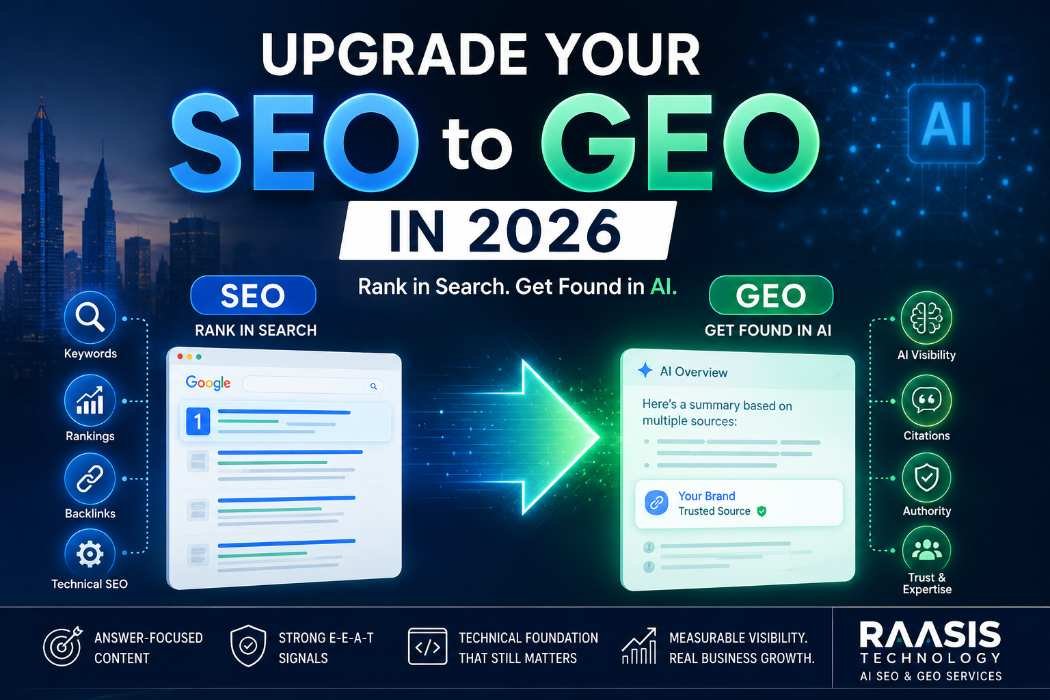
Upgrade Your SEO to GEO in 2026: The Complete Business Guide
Generative Engine Optimization (GEO) is the practice of improving digital content so generative search and AI-powered discovery systems can accurately retrieve, understand,…
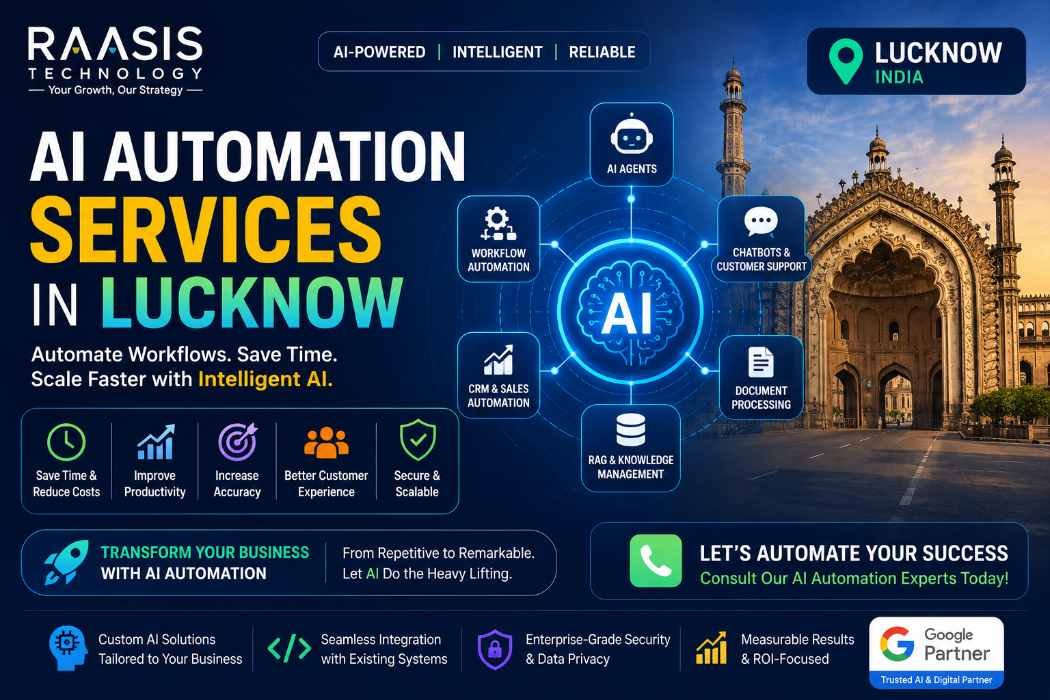
AI Automation Services in Lucknow
Key Takeaways AI automation has moved beyond generating text toward completing business workflows. Not every workflow needs an AI agent; predictable rules should often remain…
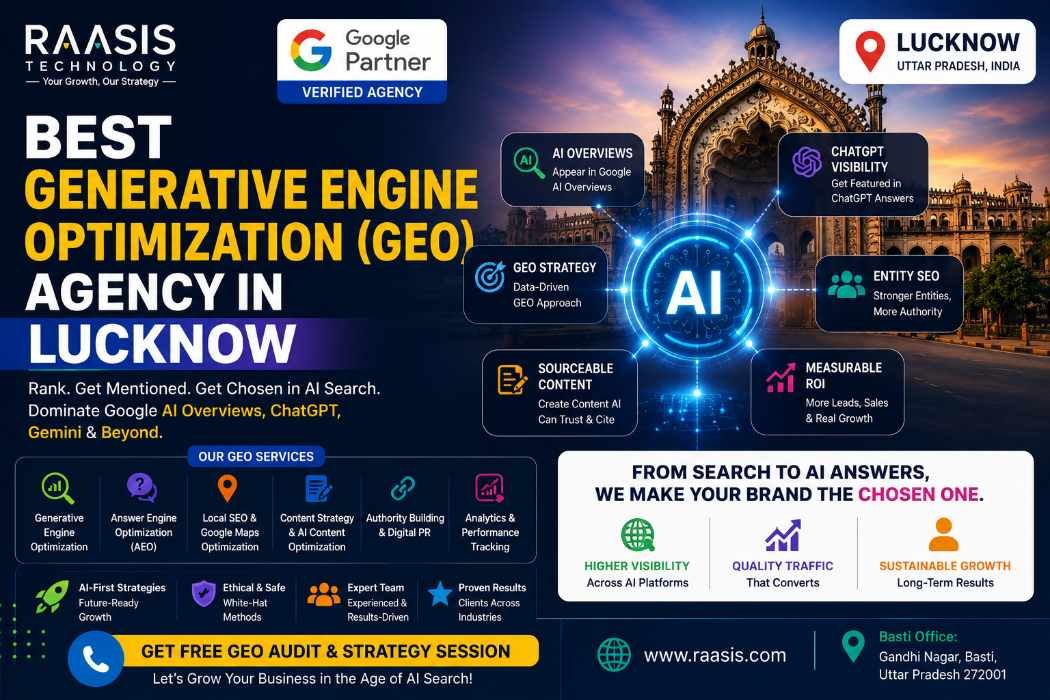
Best Generative Engine Optimization (GEO) Agency in Lucknow
Key Takeaways GEO extends SEO instead of replacing it. Google says AI Overviews and AI Mode rely on core Search ranking systems, RAG and query fan-out. Unique, expert-led,…
Build the next advantage
Make this insight operational.
Get a focused growth roadmap spanning search, AI visibility, experience and conversion.
Talk to RAASIS