Share


White-Hat Link Building in Alaska USA | Rank #1 In 1 Week
- 22 Feb 2026
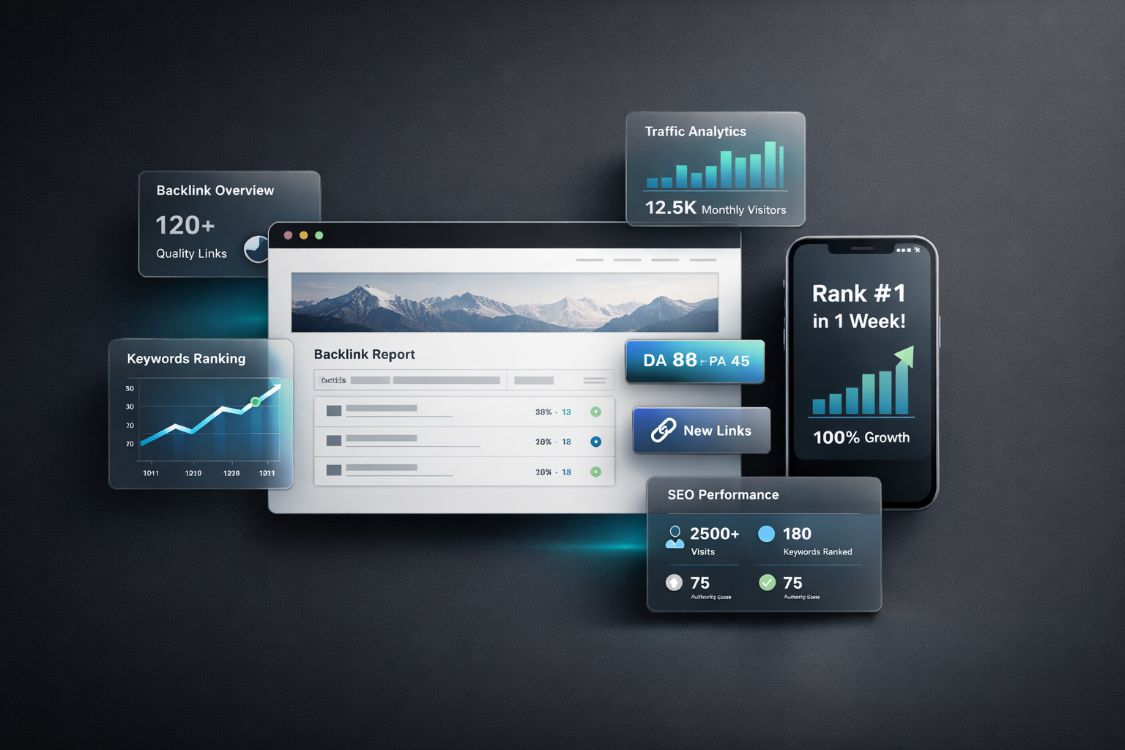
If you want sustainable rankings in Alaska in 2026, focus on earning links that are relevant, editorial, and locally credible—not on volume. True white-hat backlink building in alaska usa starts with linkable assets (guides, tools, data, case studies), then uses ethical outreach to real publications, associations, and partners. That improves authority signals Google and AI answers rely on. You may see early movement within weeks, but consistent gains come from clean execution, strong on-page SEO, and compounding trust—not “guaranteed #1 in 7 days.”
Key Takeaways
- “White-hat” means earned editorial placement, not paid placement disguised as content.
- Links matter most when they match intent: topical fit, audience fit, and geo credibility.
- Track quality signals (indexation, relevance, traffic, editorial standards), not DR alone.
- Alaska campaigns win with community partnerships, local PR, and niche expertise content.
- Avoid “package spam” and anchor stuffing—those patterns create long-term drag.
- The best results come when link building supports a conversion-first site structure.
- A transparent agency will show targets, methods, and reporting—no secrecy.
What is white-hat link building?
White-hat link building is the practice of earning backlinks through editorial merit—publishing genuinely useful content, building relationships, and contributing value to real sites—while following Google’s guidance on link schemes. It prioritizes relevance, transparency, and user benefit over manipulation, so rankings improve without risking manual actions or algorithmic suppression.
white-hat backlink building in alaska usa in 2026: what actually moves rankings
What (and what not) “white-hat” means
What: White-hat link building earns links because your page deserves to be cited.
Why: Google has spent years reducing the payoff of manipulative links; trust is harder to fake.
How: Publish assets people want to reference (original insights, local resources, comparisons, FAQs, tools), then promote them ethically.
In practice, “white-hat” usually includes:
- Editorial mentions from real publications
- Genuine partnerships where a link is a natural citation
- Contributions that add value (not mass guest-posting on low-quality sites)
- Digital PR that earns coverage because the story matters
It does not include:
- Paying for “dofollow guaranteed” placements
- Private blog networks (PBNs)
- Link exchanges at scale
- Mass directory submissions to irrelevant sites
Why Alaska SERPs behave differently
Alaska has a unique combination of tighter communities and strong local trust networks. In many niches, local credibility can outperform generic authority.
Examples of Alaska-centric trust signals that often correlate with results:
- Mentions from Alaska-based organizations or events
- Locally relevant resources pages
- Local media coverage
- Partnerships with community groups or professional associations
The “Rank #1 in 1 week” reality check
You can sometimes see indexing, minor position shifts, or long-tail improvements quickly—especially on low-competition queries or when fixing technical SEO. But “rank #1 in one week” is not a reliable promise for competitive terms.
A more honest timeline:
- Week 1–2: audit + asset plan + outreach list, fix on-page/internal linking
- Weeks 3–6: first earned placements, early authority lift on supporting pages
- Weeks 6–12+: compounding gains as links, content, and engagement reinforce trust
Soft CTA #1: If you want a clean starting point, RAASIS TECHNOLOGY can map your safest link opportunities + quick wins on your site structure (so every earned link compounds).
Why links still matter for AI search + Google: quality, relevance, and trust
What Google says (in plain language)
Google Search Central repeatedly emphasizes that links are a signal—but not the only one. In 2026, links work best when they reinforce:
- Topical authority (you are known for this subject)
- Trustworthiness (others vouch for you)
- Discoverability (good pages get found and crawled)
This aligns with how many SEO platforms (Moz, Ahrefs) describe authority signals: links are not magic; they’re evidence.
Why AI Overviews care about citations
AI results summarize what they consider credible. While the models are not “counting backlinks,” the web ecosystem they learn from and cite tends to reward:
- Pages that are referenced by other credible pages
- Sources with consistent topical coverage
- Brands that appear across the ecosystem (mentions + links + reviews)
Links vs mentions vs brand demand
Think in layers:
- Brand demand: people searching your name + clicking you
- Mentions: citations without links still build perceived legitimacy
- Links: the strongest technical signal, when editorial and relevant
The winning approach combines all three.
Quality Backlinks checklist: how to evaluate a link before you build it
What makes a backlink “quality” in 2026?
What: A quality backlink is an editorial citation from a page that’s relevant, indexed, and trusted by users.
Why: Relevance and editorial standards correlate with stable value and low risk.
How: Use a checklist before you pitch, publish, or accept any placement.
Quick evaluation checklist (snippet-friendly)
Use this before spending time or money:
- Relevance: Is the site and page topically related to your service?
- Audience fit: Would their readers plausibly click and care?
- Editorial standards: Do they review submissions? Real authors? Real pages?
- Indexation: Are recent posts indexed in Google?
- Outbound link behavior: Do they link to everything, everywhere?
- Footprints: Same templates, same anchors, same “sponsored post” patterns?
- Traffic signals (directional): Does the site show signs of real readership?
- Placement context: Is your link a natural citation inside helpful content?
- Anchor text: Is it branded/partial and natural—not stuffed?
Common mistakes (and fixes)
- Mistake: buying “DR 70” links from sites with no real readership
- Fix: prioritize relevance + editorial integrity over metrics
- Fix: prioritize relevance + editorial integrity over metrics
- Mistake: using exact-match anchors repeatedly
- Fix: default to branded and partial-match anchors
- Fix: default to branded and partial-match anchors
- Mistake: building links to the homepage only
- Fix: build to linkable assets and key service pages with a plan
- Fix: build to linkable assets and key service pages with a plan
Ethical Backlink Building in Alaska: local link opportunities that don’t violate policies
Community partnerships and sponsorships (done right)
What: Real-world partnerships that naturally lead to online citations.
Why: Local trust is hard to fake and often durable.
How: Sponsor, contribute, or collaborate—then get listed as a supporter or resource.
Ethical examples:
- Supporting a local event with a real contribution and being listed on an official partner page
- Co-hosting a webinar with a local association and being cited on the event page
- Providing a free resource (checklist, guide) that a community page references
Avoid:
- “Sponsor” pages that are clearly just link-selling directories
- Pay-to-play “awards” with no legitimacy
Alaska-specific PR angles and local stories
Local media and niche publications respond to stories that are specific:
- Seasonal readiness guides (industry-specific)
- Local data or surveys (e.g., consumer preferences, trends)
- Local business collaborations
- Community impact stories (with verifiable details)
Even if you’re not a “local-only” business, you can be locally relevant by publishing Alaska-adapted resources that genuinely help residents or businesses.
Local resources pages and associations
These can be powerful when they’re curated:
- Chambers of commerce and verified business directories
- Professional associations
- Local tourism and community resource pages (only when relevant)
The litmus test: Would you still want that mention if Google didn’t exist? If yes, it’s usually safe.
How SEO Link Building Services should run: a transparent, repeatable process
Discovery: start with intent, not “targets”
What: Understand what competitors earn links for, and what content gaps exist.
Why: You can’t out-link a market with generic assets.
How: Audit competitor link profiles by page type:
- Service pages earning links (rare, but possible)
- Guides and resources (most common)
- Tools/data pages (high value)
- Local/community pages (geo authority)
Asset planning: build what deserves links
Linkable assets that work well in 2026:
- “Best of Alaska” resource guides (only when truly useful)
- Comparison pages (transparent criteria, not affiliate fluff)
- Original research summaries (survey, internal data, or curated public data)
- Step-by-step templates and checklists
Outreach ethics: how to pitch without spamming
Good outreach is:
- personalized
- value-first (why your asset helps their audience)
- selective (fewer, better targets)
- documented (so you can improve)
Reporting should include:
- target list + why each site qualifies
- outreach status
- earned placements (URL, context, anchor used)
- link type (follow/nofollow/sponsored)
- notes on what worked
Choosing Link Building Packages: what to buy (and what to avoid) for Alaska businesses
What should be inside a good package?
A legitimate package usually includes:
- link prospecting + qualification standards
- asset creation or optimization (content that earns citations)
- outreach + relationship management
- digital PR opportunities (when relevant)
- monthly reporting + risk checks
A risky package often looks like:
- “X links per month guaranteed” with no editorial context
- no transparency on placement sites
- no mention of content quality
- heavy exact-match anchors
SMB vs multi-location budgets (practical guidance)
- SMBs: fewer placements, higher relevance, tighter local credibility
- Multi-location: scalable assets + PR + consistent brand mentions + local landing support
The goal is not “more links.” It’s more credibility.
When “more links” is the wrong goal
If your site has:
- thin service pages
- weak internal linking
- unclear positioning
- slow performance / poor UX
…then links won’t convert, and may not stick. Fix the foundation first.
Hiring a Link Building Agency For Higher Rankings: vetting questions + contract essentials
Vetting questions (snippet-friendly list)
Ask these before you sign:
- What are your quality standards for sites and placements?
- Do you show example placements (without hiding everything)?
- How do you handle sponsored attributes and disclosure?
- What is your approach to anchor text distribution?
- How do you prevent footprints and network patterns?
- Do we own the content/placements if we stop working together?
- What does reporting include, exactly?
Contract essentials
- Ownership of content
- Transparency clause (you can see where you’re placed)
- No PBNs / no link farms / no automated blasts
- Removal / correction process
- Risk and compliance language aligned with Google policies
Spotting manipulated metrics
Be cautious when an agency sells:
- DR/DA as the only success metric
- “dofollow only” as a guarantee
- “guest posts” on sites that publish anything
Good agencies show process + outcomes (rankings, traffic, leads) tied to work performed.
Common risks with a Back Link Building Agency: toxic links, penalties, and recovery
The risk patterns to watch
- Too many links in a short window to the same page
- Repeated exact-match anchors
- Links from unrelated niches
- Footer/sidebar sitewide links
- Networks that reuse the same layouts/authors
Cleanup workflow (simple and safe)
- Audit: export backlinks from Google Search Console + reputable tools
- Classify: relevant/editorial vs suspicious/irrelevant
- Remove: request removals where feasible
- Disavow: only when necessary and with care
- Rebuild: earn better links and strengthen brand mentions
References like Google Search Central and Search Engine Journal often emphasize that disavow is not a routine “maintenance” tool—it’s for specific situations.
Rebuilding trust after a bad campaign
The fastest recovery usually comes from:
- improving content quality
- earning a small number of truly editorial, relevant mentions
- strengthening internal linking + topical clusters
- cleaning anchor patterns and over-optimized pages
Advanced SEO Backlink Building strategies: digital PR, data assets, and link-worthy pages
“Link magnets” that work in 2026
- Original research (even small studies done transparently)
- Useful tools/calculators/templates
- Definitive guides updated for 2026 regulations/trends
- Expert roundups with real contributors (not fake quotes)
- Visual explainers (diagrams, frameworks) that sites embed and cite
Digital PR workflow (high-level)
- Identify a story angle that matters to a niche audience
- Build the asset (data + narrative + visuals)
- Create a short pitch tailored to each publication
- Offer expert commentary and supporting resources
- Track coverage and build follow-up relationships
This is where platforms and publications often referenced in SEO circles—Ahrefs, Moz, HubSpot, Think with Google, Search Engine Journal—align: PR-style links tend to be harder to earn, but they’re more durable.
Make earned authority compound with internal linking
A link is not a finish line; it’s an input. Ensure:
- the linked page points to key service pages naturally
- topical clusters connect (guide → service → case study → FAQ)
- pages load fast and satisfy intent
If you win a strong editorial link but the user experience is weak, you’ll lose the conversion—and often the ranking stability.
Why RAASIS TECHNOLOGY + Next Steps: an Alaska-ready link plan you can execute
Why RAASIS TECHNOLOGY (mini section)
RAASIS TECHNOLOGY is a practical partner when you want rank growth without risk. Our link building is built around:
- strict quality standards (relevance + editorial review)
- content-first assets designed to earn citations
- transparent reporting (no mystery placements)
- conversion alignment (links that support leads, not vanity metrics)
If you’re comparing providers, a strong sign is whether the team can clearly explain why a placement helps your audience—not just your rankings.
Soft CTA #2: Want a link plan that’s tailored to Alaska intent + your niche? RAASIS can build a 30-day roadmap that prioritizes safest wins first, then scales into digital PR.
Next Steps checklist (copy/paste friendly)
- Audit your current backlinks + anchors
- Identify 3–5 “linkable assets” to build or upgrade
- Tighten internal linking to your money pages
- Build a vetted outreach list (local + niche)
- Earn a small set of editorial placements first
- Track rankings, clicks, leads—not just link counts
- Repeat monthly with improved targeting
If you want sustainable rankings in Alaska—without penalties, link farms, or “secret networks”—work with RAASIS TECHNOLOGY for a white-hat campaign that ties every earned link to visibility and conversions. Start here: RAASIS SEO services.
Summary Table: Link types, risk, and best use (2026)
| Link Type (White-Hat) | Best For | Risk Level | Typical Time to Impact | What to Check | Example Outcome |
| Local association citation | Local trust | Low | 4–12 weeks | Editorial standards, relevance | Strong geo credibility |
| Local PR coverage | Authority + mentions | Low | 2–8 weeks | Real newsroom, indexed pages | Brand lift + referral traffic |
| Resource page inclusion | Evergreen citations | Low | 4–10 weeks | Curation quality | Stable link equity |
| Expert contribution | E-E-A-T support | Low–Med | 4–12 weeks | Author identity, topic fit | Topical authority growth |
| Data asset citations | Scalable authority | Low | 6–16 weeks | Method transparency | Multiple natural links |
| Niche editorial guest feature | Topical relevance | Med | 4–12 weeks | Avoid farms, ensure readership | Targeted rankings support |
FAQs
FAQ 1: Is it possible to rank #1 in Alaska in one week with link building?
Sometimes you can see early movement in a week—especially for low-competition queries or after fixing technical SEO—but consistently ranking #1 usually takes longer. Links need time to be discovered, evaluated, and supported by content that satisfies search intent. A safer goal is to build a solid base in 30–90 days: strong pages, clean internal linking, and a small set of highly relevant editorial links.
FAQ 2: What is a White Hat Link Building Service and how is it different from “paid links”?
A White Hat Link Building Service focuses on earning editorial citations by creating valuable content and pitching it to relevant sites—without buying placement or manipulating anchors. Paid link models often sell “dofollow guaranteed” placements with weak editorial standards, which can create risk. White-hat services prioritize relevance, transparency, and long-term trust signals that align with Google guidance and user value.
FAQ 3: How many backlinks do I need for Alaska SEO?
There’s no universal number because competition, niche difficulty, and your existing authority vary. A better approach is to compare link quality and relevance among top results. Often, a smaller number of highly relevant local and niche editorial links can outperform hundreds of generic links. Focus on earning links that reinforce your topical expertise and credibility, then measure results by rankings, clicks, and leads.
FAQ 4: Are directories still useful for local link building in Alaska?
Some are, but only curated and legitimate ones. The best directories are those real customers use and that have verification or editorial review (e.g., reputable local business listings or professional associations). Avoid mass submission to irrelevant directory networks. Directory links should be a small part of a broader strategy that includes content assets, partnerships, and PR-style mentions.
FAQ 5: What does White-Hat Link Building outreach look like without spamming?
It’s selective and value-first. You start with a high-quality asset (guide, data, template), then pitch a short, personalized note explaining why it helps their audience. You don’t blast thousands of emails. You track responses, refine targeting, and build relationships. Ethical outreach also respects editorial decisions and avoids manipulative language or forced anchors.
FAQ 6: Should I buy Link Building Packages or hire monthly?
If you’re early-stage, a package that includes audit + asset creation + a small number of vetted placements can be a good start. For competitive niches, monthly is often better because authority compounds over time and you can adapt based on what’s working. Either way, avoid “links-per-month” deals that hide placement quality and don’t include content or strategy.
FAQ 7: What’s the safest anchor text strategy for Alaska link campaigns?
Use mostly branded and natural anchors (brand name, URL, “learn more,” partial phrases). Exact-match anchors should be rare and used only when it genuinely fits the sentence. Over-optimized anchors are a common pattern in risky link building. A safe approach mirrors how people naturally cite sources: brand references, resource names, and descriptive phrases—supported by strong on-page relevance.
Ready to grow rankings in Alaska without shortcuts? Get a white-hat link roadmap + execution plan from RAASIS TECHNOLOGY: https://raasis.com/seo-services-india/