Share


Best AI Link Building Services in 2026: how to earn authority safely (Alaska, USA)
- 22 Feb 2026
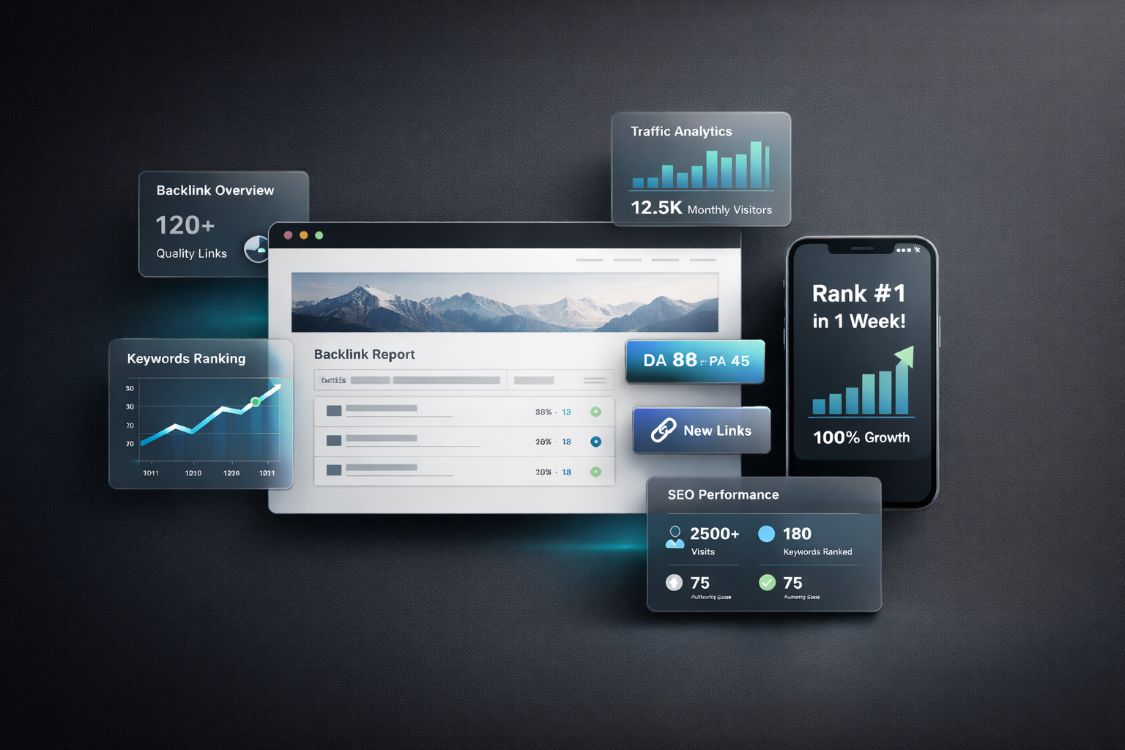
The best AI link building services in 2026 combine AI-assisted research and quality control with human editorial judgment to earn relevant, trustworthy mentions. The winning model is simple: build linkable assets (guides, tools, data), pitch them to real publishers and partners, and protect your site with strict risk checks (anchors, footprints, spam policies). AI can speed up prospecting and personalization, but it must not automate spam. For Alaska, USA, the edge comes from local credibility—PR, partnerships, and niche relevance—over generic “bulk link” packages.
Key Takeaways
- AI helps most with prospecting, personalization drafts, and risk auditing, not mass posting.
- Prioritize relevance + editorial standards to earn durable links aligned with Google’s spam policies.
- Use link attributes correctly for sponsored/UGC relationships; transparency reduces risk.
- “Best” link building improves rankings + leads, not just DR/DA screenshots.
- Alaska campaigns win with local PR, associations, and community partnerships that make sense for users.
- Always pair link building with fast pages, strong internal linking, and clear conversion paths.
- Reporting should show where links came from, why they were chosen, and what changed.
What is AI link building?
AI link building uses AI tools to speed up parts of the backlink workflow—like identifying relevant sites, drafting outreach, finding unlinked brand mentions, and auditing risk patterns. The best approach keeps humans responsible for decisions that affect compliance and brand reputation: selecting targets, validating editorial quality, approving anchor text, and ensuring the campaign follows Google’s guidance on links and spam.
Topics covered (linked first mentions for every required keyword)
- How to pick the best link building service in 2026
- What a trustworthy Link Building Agency should show you
- How to compare Link Building Packages without falling for “bulk links”
- What safe, modern SEO Backlink Building looks like with AI support
- How to verify safe link building services (risk controls + QA)
- The difference between high-quality backlinks and link spam
- How a compliant White Hat Link Building Service operates
- What to expect from SEO Link Building Services month-to-month
- How to earn true White-Hat Link Building placements, not “pay-to-place” posts
- How to practice Ethical Backlink Building that protects your brand
How to choose the best link building service in 2026 (AI-era criteria)
What: “Best” means a service that consistently earns editorial mentions that improve visibility and business results.
Why: In the AI search era, credibility signals compound—bad links can become a long-term drag, while good citations lift multiple pages.
How: Evaluate services on outcomes, process, and risk controls.
What “best” means (outcomes, not link count)
A practical definition of “best” looks like this:
- Links come from real sites with real editorial standards
- Placements are relevant to your niche and your audience
- Your rankings improve for the pages that matter
- Your leads improve because the traffic is qualified
- The strategy is repeatable and documented
If the pitch is mostly “we’ll deliver X links,” you’re buying a commodity. In 2026, commodity links are the easiest for search systems to discount.
Why AI changed outreach and quality control
AI has improved:
- Finding qualified prospects faster
- Drafting personalized outreach more efficiently
- Detecting risky patterns (anchors, footprints, over-templated sites)
But AI has also made it easier for low-quality vendors to produce spam at scale. That’s why you should ask: What do you automate, and what do humans approve?
How to score a service in 10 minutes
Use a simple scorecard:
- Transparency: Will they show target examples before outreach?
- Quality standards: Do they reject sites that publish anything?
- Compliance: Do they reference Google Search Central guidance and spam policies?
- Reporting: Can you see URL, context, anchor, and relationship type?
- Conversion alignment: Do they care which pages get authority—and why?
Soft CTA #1: If you want a quick “scorecard audit” of your current backlinks and link opportunities (including Alaska-local angles), RAASIS TECHNOLOGY can map a clean action plan around your goals.
What AI link building services actually do (and what they should never automate)
What: AI link building is a workflow, not a single tactic.
Why: Automating the wrong steps creates patterns that look unnatural and can be ignored or penalized.
How: Keep AI as an assistant—humans remain accountable.
What a modern workflow looks like
A strong workflow typically includes:
- Discovery: competitor link intent + content gaps
- Asset plan: what you’ll publish that deserves citations
- Prospecting: build a list of relevant publications/partners
- Qualification: vet editorial quality and risk
- Outreach: personalized, helpful pitches
- Placement review: confirm context, anchor, disclosures
- Measurement: rankings, clicks, leads (not just link count)
What should never be “fully automated”
From practical experience, these are dangerous to automate:
- Mass outreach blasts with templated language
- Auto-generating guest posts for hundreds of sites
- Auto-inserting exact-match anchors repeatedly
- Bulk purchasing placements from “networks”
This is how footprints form—and footprints are the opposite of trust.
How to run human-in-the-loop safeguards
Add checkpoints:
- A human approves the final target list
- A human approves anchors and landing pages
- A human reviews placement context and disclosures
- Risk scanning runs before and after the campaign
high-quality backlinks vs. risky links: the 2026 quality checklist
What: A “quality” link is an editorial citation from a relevant page that users would trust.
Why: Relevance + editorial oversight correlate with durability and low risk.
How: Vet every placement with a checklist before you pitch or publish.
What “quality” looks like in Google’s ecosystem
Google’s guidance reinforces two big ideas:
- Links help discovery and relevance when they’re natural and useful.
- Manipulative link behavior falls under spam policies and can be devalued or penalized.
So “quality” is less about a metric and more about real-world credibility: topic fit, editorial standards, and real audience.
The 10-point quality checklist (featured-snippet friendly)
Before you pursue a link, check:
- Topical relevance (same industry or adjacent expertise)
- Audience match (their readers would care)
- Editorial standards (human review, real authors)
- Indexing health (recent posts appear in Google)
- Outbound link behavior (not linking to everything)
- Content quality (not thin, not AI-spam)
- Placement context (natural citation, not a footer dump)
- Anchor naturalness (branded/partial, not stuffed)
- Transparency (no “we can’t show you sites” secrecy)
- Longevity (stable site, consistent publishing)
Realistic examples (no fake numbers)
- A niche Alaska business earns a mention from a local association resource page after providing a genuinely helpful checklist for members. That link is relevant and likely to stay.
- A vendor offers “50 guest posts in 7 days.” Even if those sites look “strong” on paper, the pattern itself is a risk signal.
Common mistakes (and fixes)
- Mistake: choosing targets by DR/DA alone
- Fix: require topical relevance + editorial review
- Fix: require topical relevance + editorial review
- Mistake: linking only to the homepage
- Fix: build a linkable guide + internally route authority to service pages
- Fix: build a linkable guide + internally route authority to service pages
- Mistake: repeating exact-match anchors
- Fix: make branded anchors the default; use partials sparingly
- Fix: make branded anchors the default; use partials sparingly
White Hat Link Building Service basics: policies, disclosures, and safe placements
What: White-hat link building follows Google’s guidance and avoids manipulative link schemes.
Why: Compliance keeps gains stable and protects the domain long-term.
How: Use proper link relationships and avoid “hidden paid links.”
What Google considers link spam (plain English)
Google’s spam policies describe behaviors that can lower rankings or remove eligibility if they’re meant to manipulate search systems.
In link terms, the red zone often includes:
- paid links passing ranking credit without disclosure
- large-scale guest posting on low-quality sites
- link exchanges at scale
- automated link generation
Why “sponsored/ugc/nofollow” matters
Google provides guidance on qualifying outbound links and the meaning of sponsored/UGC relationships.
In practice:
- If money or compensation is involved, disclosure matters.
- If a link is user-generated (comments/forums), mark it appropriately.
- You don’t “win” by forcing dofollow; you win by earning trust.
How to keep campaigns compliant
A safe baseline:
- Do not buy “dofollow guaranteed” links
- Avoid networks with identical templates/authors
- Keep anchors natural and diverse
- Focus on assets that deserve citations
- Document decisions and placements
SEO Link Building Services process: discovery → assets → outreach → reporting
What: A good service runs a repeatable monthly cycle with clear deliverables.
Why: Consistency + documentation help you scale safely.
How: Use a 4-phase process that ties links to business goals.
Phase 1: Discovery (what to build and where to earn links)
Discovery should answer:
- Which pages should rank (service pages, location pages, key guides)?
- What kinds of links are your competitors earning (PR, resources, partnerships)?
- What content gaps exist that you can fill better?
This is also where AI is useful: clustering topics, scanning competitor pages, and identifying linkable patterns—then humans verify.
Phase 2: Asset planning (the multiplier)
Linkable assets that win in 2026:
- “Definitive guide” pages updated for current standards
- Data summaries (transparent methodology)
- Tools/templates/checklists
- Comparison pages with honest criteria
- Expert explainers designed for quick referencing
Google’s guidance is clear that helpful content matters; AI can assist drafting, but the intent must be genuine and useful.
Phase 3: Outreach (ethical, selective, relationship-first)
Strong outreach is:
- small-batch and personalized
- relevant to the publication’s audience
- based on a real value offer (a useful resource)
Phase 4: Reporting (what you should see every month)
Minimum reporting standard:
- Placement URL and the page that links to you
- Where it points (target page) and why
- Anchor text used
- Relationship disclosure if applicable
- Notes on what worked and what didn’t
- Rank/traffic/lead trends tied to the campaign
Link Building Packages explained: what’s inside, fair expectations, and red flags
What: Packages are only useful when they describe process + standards, not just quantities.
Why: Quantity-only packages incentivize low-quality placements.
How: Buy based on business stage and risk tolerance.
What to buy for SMBs vs growing brands
SMBs (typical needs):
- 1–2 strong linkable assets
- a small set of local + niche citations
- internal linking improvements
- basic PR opportunities (when relevant)
Growing brands:
- multiple assets (data + tools + guides)
- steady digital PR outreach
- mention reclamation (unlinked brand mentions)
- systemized reporting and QA
Why “guaranteed links” is often a trap
If a vendor guarantees volume without showing editorial standards, it usually means they control the placement sites. That’s the definition of “network risk.”
Summary Table: Package types vs best use (6+ rows)
| Package Type | Best For | What You Should Receive | Main Risk | What to Verify | “Good” KPI |
| Starter (Local Trust) | Alaska SMBs | local PR targets + association/resource links | irrelevant directories | curation + indexing | qualified clicks |
| Asset + Outreach | New sites | one linkable guide + outreach | weak asset quality | editorial fit | earned mentions |
| Niche Editorial | Specialists | placements in niche publications | guest-post farms | real readership | ranking lift for niche terms |
| Digital PR Sprint | Campaigns | data story + journalist pitching | forced angles | methodology + transparency | citations + brand lift |
| Authority Compounding | Growing brands | multi-asset plan + internal linking | misaligned targets | topic clusters | leads, not DR |
| Cleanup + Rebuild | Recovery | audit, removals, safer links | over-disavow | careful classification | stability + regain visibility |
Hiring a Link Building Agency for Alaska, USA: local trust + niche relevance
What: Alaska link building works best when it reflects local credibility and real community relevance.
Why: Local citations and partnerships often outperform generic national directories for local intent.
How: Combine local PR + associations with niche editorial placements.
What Alaska-local signals look like online
Examples of legitimate local signals:
- local associations and member directories (curated)
- local event pages (real partnerships)
- Alaska-focused publications when there’s a real story
- community resource pages that genuinely help residents/businesses
Why local PR + partnerships outperform generic directories
Directories can still help when they’re curated, but PR and partnerships create:
- stronger brand trust
- more natural anchor text
- real referral traffic (often overlooked)
AI can help identify local opportunities (resource pages, event calendars, partnership lists) faster—humans validate legitimacy.
How to build authority without over-optimizing anchors
A practical anchor rule:
- default to brand, URL, or descriptive anchors
- use partial-match anchors occasionally
- avoid repeating exact-match phrases across many sites
Building safe link building services with AI: risk controls, anchor strategy, and QA
What: Safety is a system: standards, checks, and documentation.
Why: Link spam patterns can suppress growth even without a visible penalty.
How: Use AI to audit risk, not to generate spam.
What creates penalties and suppression
Common risk signals:
- too many links too quickly to the same page
- identical anchor patterns across unrelated sites
- footprints from the same templates/authors/IP networks
- “sponsored” relationships masked as editorial
Google’s spam policies are the reference point for what to avoid.
Why anchor diversity is non-negotiable
Anchor text is a strong pattern signal. If it looks engineered, it looks untrusted. The safer strategy mirrors how humans cite sources: brand, page titles, and natural descriptions.
How AI can audit risk before it spreads
Use AI for:
- anchor distribution analysis
- footprint detection (templated sites, repeated bios)
- relevance scoring (topic similarity)
- placement QA (does the link make sense in context?)
Humans still decide what to keep, what to reject, and what to fix.
Modern SEO Backlink Building tactics that still work in 2026 (digital PR + data assets)
What: The best links come from pages that would exist even if Google didn’t.
Why: Editorial links from real publications are harder to fake and more durable.
How: Build “citation-worthy” assets and pitch them like PR.
What earns links now: data, tools, and expertise
Industry playbooks (e.g., Ahrefs’ link building guidance) consistently emphasize creating value, not chasing metrics.
High-performing asset types:
- data stories (local or niche insights)
- tools/templates (practical utility)
- definitive guides (updated, skimmable, credible)
- expert commentary (real, attributable expertise)
Why “helpful content” wins citations
When your page answers questions clearly and includes proof and examples, it’s easier for other writers (and AI summaries) to cite it. Google’s guidance around helpful, user-first content supports this direction.
How to run a simple digital PR engine
- Pick one topic with strong interest (local or niche)
- Build a resource worth citing (data, tool, or definitive guide)
- Create 20–40 highly relevant targets (not 500 random sites)
- Draft outreach with AI assistance, then human-edit for credibility
- Follow up politely and track outcomes
- Update the asset quarterly so it stays reference-worthy
For AI-era visibility, also understand how Google surfaces sources in AI experiences.
Why RAASIS TECHNOLOGY + Next Steps: an Alaska-ready plan to earn Quality Backlinks ethically
What: You need a system that earns trust and converts it into leads.
Why: Links are only valuable if your site captures demand with fast UX and clear offers.
How: Combine white-hat acquisition + on-site conversion + measurement.
Why RAASIS TECHNOLOGY (mini section)
RAASIS TECHNOLOGY is built for businesses that want sustainable ranking growth—not risky shortcuts. We focus on:
- strict target vetting (relevance + editorial standards)
- linkable assets designed to earn citations
- AI-assisted QA to reduce risk patterns
- conversion-first SEO so authority turns into calls, forms, and bookings
Soft CTA #2: If you’re planning to scale in Alaska (or across the USA), RAASIS can build a 30-day blueprint: what to publish, who to pitch, what to measure, and how to keep it safe.
Next Steps checklist (quick execution)
- Audit current backlinks (anchors, relevance, patterns)
- Identify 2–3 linkable assets you can publish in 30 days
- Fix internal linking so authority flows to money pages
- Build a vetted target list (local Alaska + niche industry)
- Run selective outreach with human-reviewed personalization
- Track rankings + clicks + leads (not only link metrics)
- Repeat monthly with better targets and stronger assets
If you want the best link building service approach for 2026—AI-assisted, white-hat, and designed to convert—partner with RAASIS TECHNOLOGY and start with our SEO foundation and link strategy here: https://raasis.com/seo-services-india/
FAQs
FAQ 1: Are AI link building services safe for Google in 2026?
They can be safe if AI is used for research, drafting, and risk auditing—not for mass publishing or automated spam. The safety line is simple: links should be earned because the content deserves to be cited, and the campaign should avoid manipulative patterns (bulk low-quality guest posts, forced anchors, hidden paid links). A trustworthy provider will show quality standards, target examples, and transparent reporting aligned with Google’s spam policies.
FAQ 2: What’s the difference between white-hat and “AI spam link building”?
White-hat focuses on editorial value: linkable assets, real outreach, and placements that make sense for users. “AI spam” focuses on scale: templated sites, automated posts, repetitive anchors, and networks selling placements. The difference shows up in longevity—white-hat links remain credible and keep helping, while spam patterns tend to be discounted or create long-term suppression. If the vendor won’t reveal placements or quality rules, treat it as a warning.
FAQ 3: How many backlinks do I need to rank in Alaska, USA?
There’s no universal number. Alaska SERPs often reward local credibility and niche relevance, meaning a smaller set of strong local and industry citations can outperform a large pile of generic links. Start by reviewing the top results: what kinds of sites cite them (local orgs, publications, resources)? Then build assets and outreach that match that pattern—without copying risky footprints like repetitive exact-match anchors.
FAQ 4: Do “Link Building Packages” work, or should I hire monthly?
Packages can work when they describe process + standards (asset creation, vetting, outreach, QA, reporting). Avoid packages that only promise “X links.” Monthly engagements often perform better in competitive spaces because authority compounds and you can adapt based on what’s earning real mentions. If you’re starting out, a short sprint to build assets plus a small set of vetted placements is often a smart first step.
FAQ 5: What should a link building agency report each month?
At minimum: the placement URL, the linking page context, the destination page, anchor text, relationship type (if sponsored/UGC), and notes on why the placement is relevant. They should also report outcome metrics tied to business goals: ranking movement for target pages, organic clicks, and lead indicators. If reporting is only a list of “DA/DR links delivered,” you’re missing the information needed to manage risk and improve results.
FAQ 6: Can AI help with digital PR link building?
Yes—AI is excellent for summarizing journalist beats, clustering story angles, drafting outreach variants, and identifying publications that match your topic. But PR still requires human judgment: making sure the story is real, the data is defensible, and the pitch fits the newsroom. The best teams use AI to move faster while keeping editorial integrity—because credibility is the product in PR-based link earning.
FAQ 7: What is the safest anchor text approach in 2026?
Default to branded and natural anchors (brand name, URL, page title, descriptive phrases). Use partial-match anchors occasionally when it fits the sentence, and avoid repeating exact-match anchors across multiple placements. Anchors are one of the easiest patterns for search systems to detect, and over-optimization can reduce trust. A safe campaign looks like organic citations from real writers—diverse language, natural placement, and relevant context.
Ready to build durable authority with AI-assisted, white-hat execution? Start with RAASIS TECHNOLOGY’s SEO + link strategy here: https://raasis.com/seo-services-india/